
NEWS
PSS releases report on 2025 port sector performance
News |Published: Jun 18, 2026
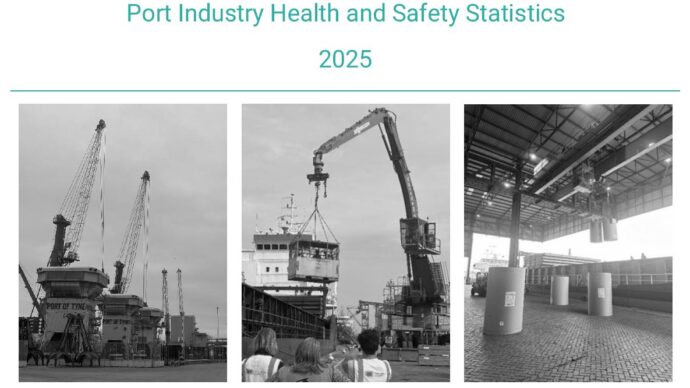
The annual analysis of port industry incidents for 2025 highlights a number of changes in the sector’s reported performance. The main contributing dataset shows increases in lost time injuries, RIDDOR-reportable incidents, and days lost compared with 2024.
These results need careful interpretation. An increase in reported incidents does not always mean that safety performance has worsened in a simple or direct way. As organisations develop a stronger reporting culture, workers may be more likely to report incidents, near misses, unsafe conditions, and events that may previously have gone unrecorded. In some cases, this can lead to a period where reported figures appear to worsen before longer-term improvements become visible.
This does not mean that increases should be dismissed. The 2025 data shows areas where continued focus is needed, particularly around the severity and impact of incidents. However, it also reinforces the importance of mature reporting, better data quality, and continued member participation in helping the sector understand risk more clearly.
PSS would like to thank all members who contributed data to the 2025 report.
Overall performance
In 2025, the main monthly reporting dataset represented an average combined workforce of 17,792 direct and indirect workers, and 41.75 million hours worked.
Within this dataset:
- Lost time injuries increased to 213, compared with 178 in 2024.
- The lost time injury incidence rate increased to 1.19 per 100 workers.
- The lost time injury frequency rate was 5.10 per million hours worked.
- RIDDOR-reportable incidents increased to 129, compared with 105 in 2024.
- The RIDDOR incidence rate increased to 0.73 per 100 workers.
- Days lost increased to 5,271, compared with 3,021 in 2024.
These figures suggest that, while ports continue to report and manage a wide range of day-to-day operational risks, the severity and impact of some incidents increased during the year. Data reported during 2026 will be reviewed throughout the reporting year to help understand whether these changes represent emerging trends, improvements in reporting maturity, changes in operational risk, or a combination of factors.
Supplementary returns
For 2025, PSS also requested RIDDOR-reportable incident information from all port members. This was introduced to give a broader indication of sector safety performance, without relying only on those members able to submit full monthly returns.
Thirteen members provided supplementary high-level returns, representing an additional 1,102 workers and a further eight RIDDOR-reportable incidents.
These figures have been kept separate from the main rate-based analysis because they do not include the full supporting dataset needed for reliable benchmarking. However, they provide useful additional context and help improve the overall sector picture.
When considered separately, the supplementary returns indicate a RIDDOR incidence rate of 0.73 per 100 workers, which is equal to the rate seen in the main monthly reporting dataset.
Fatalities
One fatal incident involving a port worker and mobile plant was reported in 2025. Within the 2025 dataset 13 incidents were recorded where the potential outcome could have been a fatality, despite the actual outcome being less severe, reinforcing the need for continued focus on controlling high-consequence risks across port operations.
RIDDOR reportable injuries
RIDDOR-reportable injuries increased by 30% to 137 in 2025. The details of RIDDOR incidents (including supplementary data) are:
- One fatality
- 32 specified injuries
- 104 over-7-day injuries
The reported number of RIDDOR specified injuries increased by 23% (from 26 in 2024)
Lost time injuries
Lost time injuries increased by 20% in 2025., with the number of lost days increasing 74% to 5271 (from 3021 days lost in 2024).
The increase in days lost suggests that the sector should continue to focus not only on the number of incidents occurring, but also on their severity, impact, and underlying causes.
Immediate causes
Slips, trips, and falls on the same level remained the most common immediate cause of lost time injuries, increasing from 36 in 2024 to 51 in 2025.
The most notable increase was in injuries involving hitting something fixed or stationary, which rose from six in 2024 to 39 in 2025. Injuries while handling, carrying, or lifting, being hit by moving objects, and driving-related events also featured within the top five immediate causes.
Taken together, these causes point to recurring risks in everyday port operations, including movement around the workplace, interaction with fixed objects and equipment, manual handling, moving vehicles or loads, and busy operational environments. This does not suggest that these risks are simple or low-level; rather, it highlights the importance of maintaining consistent focus on the conditions in which routine work is planned, supervised, and carried out.
Incident locations
Incident distribution remained broadly consistent with previous years. The most frequent locations for LTIs were berth/quayside areas, container ships, and open storage areas which rose to the the second most common location.
This reinforces the need to manage risk across the full operational environment, including areas where people, vehicles, plant, cargo, infrastructure, and changing site conditions interact.
What the data means
The 2025 figures show a reported increase in several key incident measures, including LTIs, RIDDOR-reportable injuries, and days lost. These increases should be taken seriously, particularly where they point to higher severity, longer recovery times, or high-potential events.
At the same time, the data should be viewed in the context of a sector that is continuing to mature its approach to reporting and learning. Stronger reporting can make performance appear worse in the short term, but it is also essential for identifying risk, targeting improvement, and preventing more serious harm.
PSS will continue to review data reported during 2026 to understand whether the changes seen in 2025 continue, stabilise, or begin to improve. This will help identify where further sector focus, guidance, collaboration, or shared learning may be needed.
The full Port industry incident statistics report for 2025 is available to download below.