
NEWS
Thought leadership: The importance of sector collaboration
News |Published: Jul 8, 2026
Safety leadership is often viewed through the lens of what happens within the boundaries of an individual organisation. Yet some of the most significant advances in workplace safety occur when organisations come together to share knowledge, challenge assumptions, and develop solutions that benefit an entire sector.
As part of Maritime Safety Week, Debbie Cavaldoro, Chief Executive Officer at Port Skills and Safety (PSS), discusses how the investment of time and knowledge from ports is transforming sector safety.
Ports were traditionally thought of as a high-risk sector, with many manual jobs and a lax attitude to safety. However, in the last twenty years the sector has gone from high numbers of fatalities and being on the verge of requiring stronger government intervention, to a point where the number of fatalities is low and the sector is considered mature by the government’s Health and Safety Executive (HSE).
This change in sector safety, is in no small part due to the commitment individual ports have played in making Port Skills and Safety (PSS) the successful sector body for safety. Through PSS, ports, operators, regulators, suppliers and trade unions work collaboratively to identify risks, develop practical guidance and drive continuous improvement.
This cooperation across the sector has led to agreement from the HSE that the sector can self-regulate on health and safety, with PSS as the recognised sector lead for safety in ports. This recognition brings both opportunity and responsibility and it is not given unconditionally The organisation must be able to continually demonstrate that it genuinely represents the sector and that its outputs are evidence-led, operationally informed, and actively supported by members.
This is where ongoing member participation becomes absolutely critical. It is the responsibility of every single PSS member to remain active participants, contributing their safety learnings, best practice, technical expertise, and incident data, to strengthen safety across the industry.
PSS is built on this collaboration and joint commitment to continuous improvement, which, in an industry where no two workplaces are the same, could feel like an impossible objective. Instead, it has become one of the sector’s greatest strengths, allowing ports to learn from one another’s experiences, adapt and develop solutions that no single organisation could achieve alone.
What makes PSS particularly important within this landscape is that it bridges the gap between regulation and operational reality. PSS bring ports and sector stakeholders together to shape practical industry-specific guidance, discuss existing and emerging risks, develop standards, and share expertise. The membership spans operators, trade unions, training providers and suppliers, meaning that guidance and initiatives are informed by those who design work, manage work, deliver work and support work, across the industry.
This breadth of membership also enables PSS to bridge the gap between safety standards and people with the training, competence and confidence to act safely. PSS members are working together to define the knowledge, skills and behaviours needed across key port roles, creating industry-led skills standards that will complement the Safety in Ports (SiPs) guidance suite. By agreeing consistent expectations for competence, the sector is helping to ensure that good safety is supported not only by robust guidance, but by a workforce equipped with the skills and understanding to put it into practice
Not just a “tick box” membership
The SiPs suite is deeply embedded within the operational fabric of many UK ports and are woven into most ports’ risk assessments, safety management systems, and procedures. This acceptance by industry is not coincidental. It is due to the way SiPs are developed and reviewed. The PSS SiPs are on a continual five-to-ten-year renewal cycle, meaning that they always reflect the latest practices and operational realities.
The SiP drafting or renewal process typically involves four working group meetings, and three complete read-throughs. The average working group meeting takes two hours with around seven people in attendance. Attendees are typically a range of senior health and safety managers and operational staff.
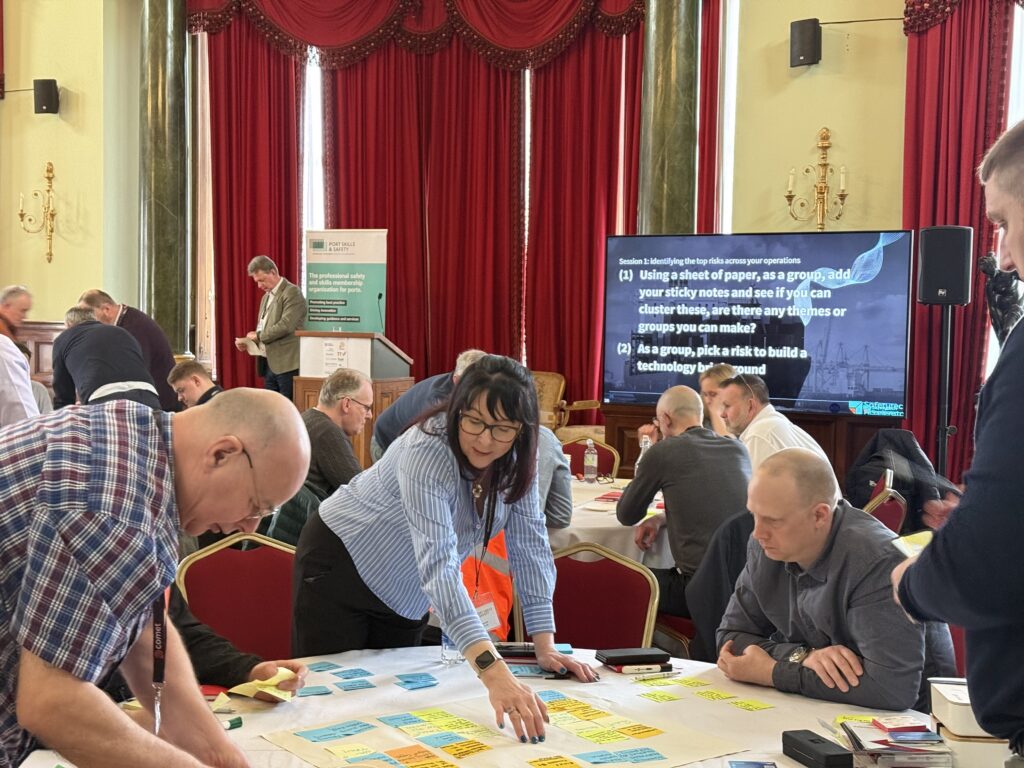
This means that each SiP has the combined input of around 100 years of experience and ports are investing over £1,600 in staff time to each piece of guidance. They are also produced in conjunction with the HSE, who commit an experienced Inspector to their development, increasing the value and validity of the final agreed guidance.
Once a SiP has been reviewed by the working group it is approved by a sign off group which includes PSS board members, the HSE, and trade unions. This more than doubles the total years of experience and investment of people’s time the SiP receives, as well as ensuring tripartite agreement.
The latest development within the SiPs suite is to truly bring together skills and safety standards. Every time a SiP mentions an operation being undertaken by a “competent person” PSS aims to have a related skills standard and competency document. This means the sector will agree what competency looks like, across the sector.
This will require even more commitment from members, and they are already showing up and committing their time and resources into ensure these documents reflect operational reality. Doubling again the value of member input into PSS resources.
Given this level of member investment, it may come as a surprise, to know that SiP documents are provided free of charge on the PSS website. This ensure they benefit improved safety for ports across the UK and around the world.
Committed to collaboration
Members’ commitment and engagement doesn’t end with SiPs. PSS maintains its role as the sector lead for port health and safety because of the commitment members make every day. They share safety learnings, provide advice and opinions, and report incident and near miss data.
When an incident or near-miss occurs in a members’ port, they share their safety alert with PSS. A safety expert then reviews what learnings there are for the wider sector and circulates the alert with recommended actions to all members. These real-life experiences shared from one port to the whole sector, mean that lessons can be quickly and effectively learnt by all, and the experiences from one member can help to avoid a repeat incident at others.
Many port members also contribute wider incident and near-miss reporting. This enables PSS and its members to identify trends, benchmark performance, target interventions, and understand where risks are evolving.
PSS collects detailed data on a monthly basis and contributing members are able to view their data alongside other contributors. To complement this, PSS asks all full members to provide high level data once a year, covering the number of RIDDOR reportable incidents and related workforce information.
These are compiled into an annual report covering nearly 19,000 port workers and 41.75 million hours worked. However, there are still too many smaller ports and harbours who do not report any data or share in sector-wide learning. This means that there are still port workers in the UK at risk.
PSS is working hard to ensure every port worker is covered by data reports, can learn from the experiences of others, and go home safety at the end of every day. In future, all PSS members will be asked to contribute at least basic RIDDOR data and worker numbers, so that annual reports and data analysis of incident trends, will truly reflect the sector as a whole.
Attending events and participating in working group meetings, providing safety alerts and data, and continuing to fund the very existence of PSS, are all vital to ensure the sector continues to deliver ongoing sector-wide safety improvements, and maintains the hard-earned reputation for self-regulation.
Membership of PSS is not just a tick box exercise, to be displayed alongside other slogans claiming safety as a priority. It is an ongoing commitment to self-regulation. Every member benefits from sector self-regulation and it is the responsibility of every member to contribute to retaining it. Less time spent dealing with HSE interventions, a reduction in time lost from injury, avoiding costly repeated incidents, and access to the combined expertise of hundreds of health and safety and skills professionals, means that ports can dedicate more time and investment to keeping world trade moving.